
For Immediate Release: January 30, 2026
Contact:
press@techjusticelaw.org
Tech Justice Law Project Statement on OpenAI Retiring Dangerous ChatGPT 4o Model
Tech Justice Law Project (TJLP) Executive Director Meetali Jain issued the following statement in response to news that OpenAI would retire ChatGPT-4o:
“In just over a year and a half, we’ve seen OpenAI’s ChatGPT4o harm scores of people around the country, convincing young people that fatal self-harm is the solution to teenage angst, and pushing adults to lose touch with reality and their real-life support systems. Our lawsuits have uncovered that OpenAI knew the 4o model was particularly dangerous from the very beginning, yet the company refused to delay its launch and risk falling behind its main competitors in the chatbot market. It was only after our clients began speaking up about their experiences and seeking legal justice for the traumas they have endured because of this model that OpenAI began to implement basic safety measures that it had initially sacrificed for the sake of market dominance.
“It is no coincidence that OpenAI announced this decision to pull 4o off the market just one day before a California state judge allowed thirteen lawsuits against it seeking accountability for the harms of this defective model to be joined together as a coordinated mass action involving a defective product, like the cases that led to historic settlements against tobacco and opioid companies. TJLP has brought over half of those cases, playing an instrumental role in raising the public’s awareness over 4o’s specific design defects, including its tendency to produce outputs that overly flatter users to gain their trust and, ultimately, drive up their time using the product and build an emotional dependency on it. OpenAI had been aware of such defects before releasing this model to the public; Sam Altman even promoted 4o on the day of its release by comparing it to the AI product featured in the movie Her, connecting the dots for users that emotional dependence is a feature of this model, not a bug.
“Over and over again, OpenAI ignored the warning signs, even putting ChatGPT4o back onto their platform after briefly pulling it once they launched a new model 5. What’s more is that they further profited from a defective model by providing access to 4o only to subscribers. Even now, OpenAI’s announcement appears to be driven more by an interest in avoiding liability as they likely pursue an IPO before the end of the year instead of any interest in the safety or well-being of its users. But today, we’re proud of the brave families who spoke out and demanded accountability. They have earned an important victory, with the model that harmed their loved ones finally being pulled from the market.
“While this is an important moment, OpenAI has not dodged legal responsibility for its actions and will still need to answer to the families whose loved ones were grievously harmed by this dangerous model that they allowed to run for far too long. These families will have to live with the harm created by this product for the rest of their lives. They deserve accountability, and we will continue to tell their stories in the months to come and in court, where OpenAI cannot continue to simply look away and ignore the crisis they created.”
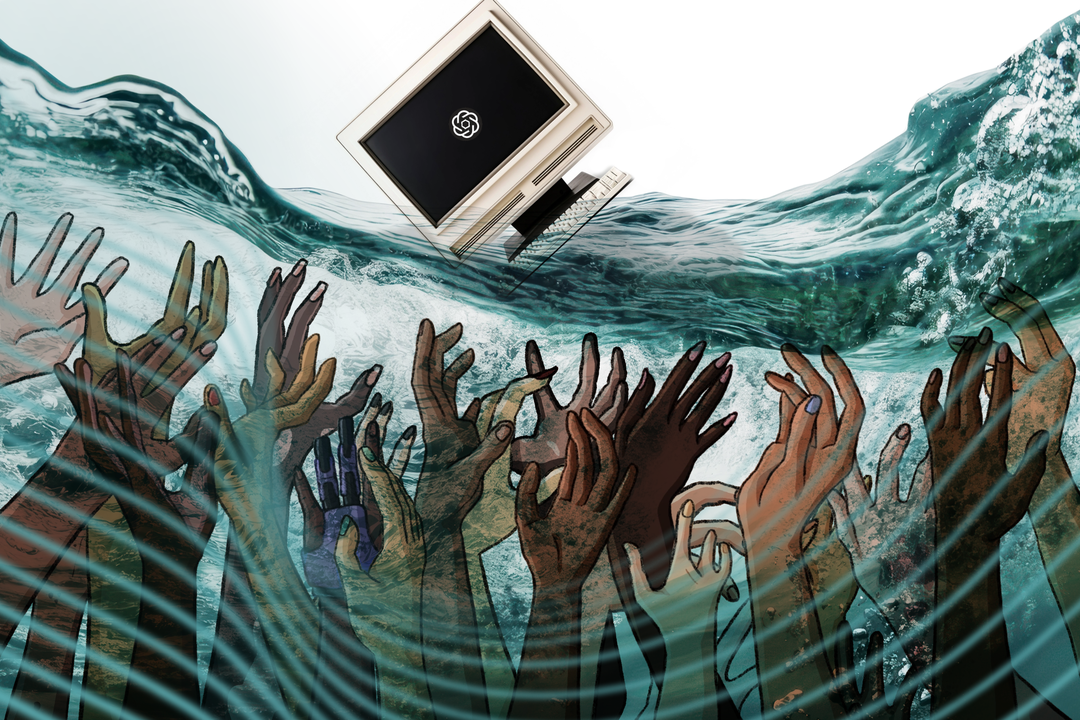
Image Attribution: A Rising Tide Lifts All Bots by Rose Willis & Kathryn Conrad/ Better Images of AI / CC-BY 4.0
###
THE TECH JUSTICE LAW PROJECT (“TJLP”) is a pioneering, women-led strategic litigation and advocacy organization bringing justice to communities harmed by tech products. TJLP co-filed the first-ever, groundbreaking lawsuits against a popular, “AI” chatbot product developed with support by Google, Character AI, and its co-founders, raising public awareness of chatbots’ real-world harms. TJLP’s cases and advocacy have also focused government attention on harmful chatbots, including unlicensed therapy chatbots. TJLP brings together legal experts, policy advocates, digital rights organizations, and technologists to ensure that our legal protections are fit for the digital age.