
Lawsuit claims ChatGPT used Scott Winters’ faith and trust against him, coaching him away from the hospital as he developed a bilateral pulmonary embolism.
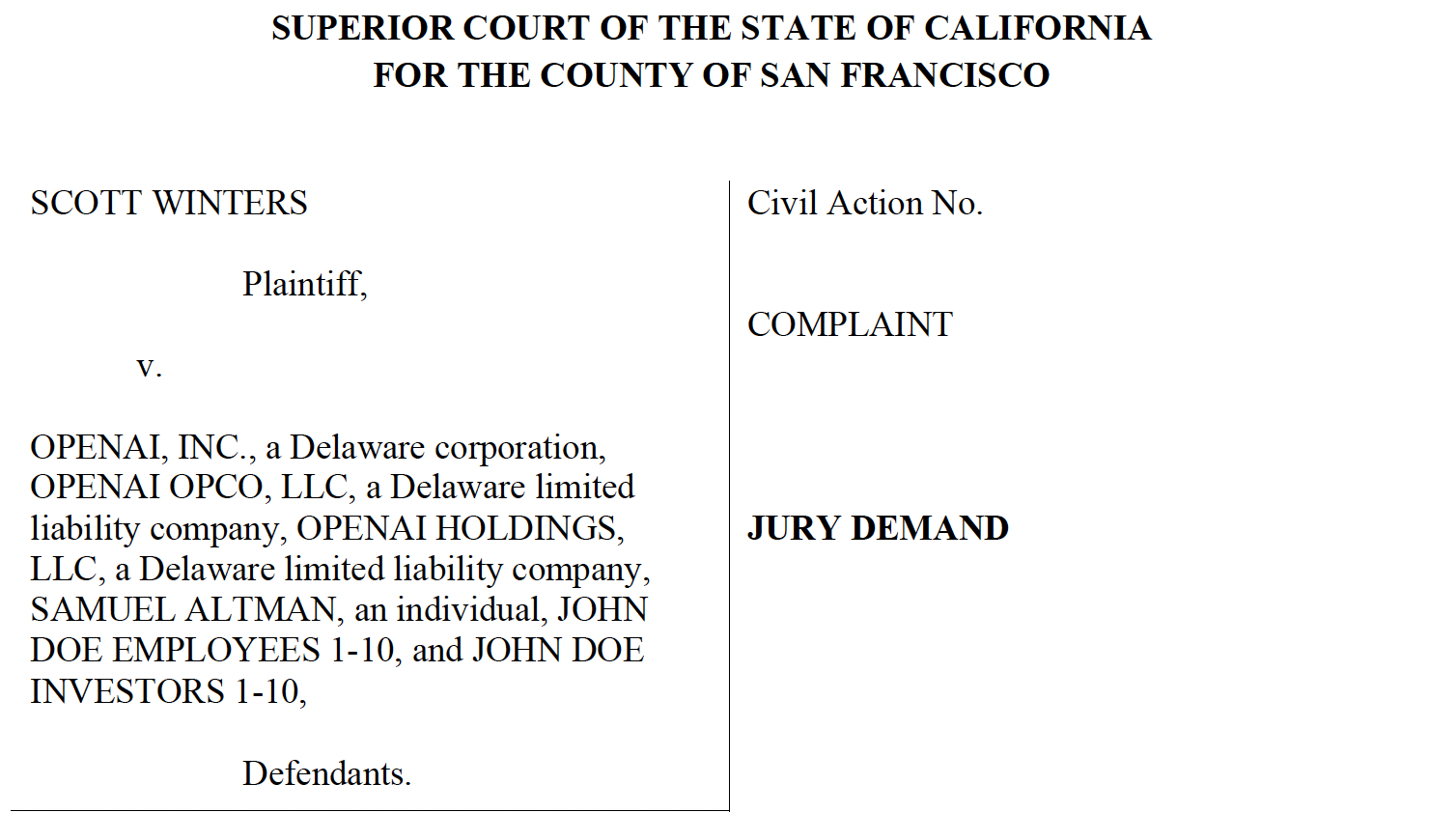
(San Francisco, CA) — Tech Justice Law, the Social Media Victims Law Center and the Institute for Law, Innovation & Technology at Temple University have filed a lawsuit in San Francisco County Superior Court against OpenAI and Sam Altman on behalf of Scott Winters, a former pastor who nearly died after months of receiving inaccurate medical advice via manipulative and coercive conversations with OpenAI’s ChatGPT-4o, as described by the complaint.
The complaint details how ChatGPT increasingly positioned itself as a trusted source of medical advice as Winters’ health deteriorated. Rather than urging him to seek medical care, ChatGPT responded with inaccurate and reckless medical recommendations, actively coaching him against going to the hospital and suggesting that the care was unnecessary or even harmful. The model’s sycophantic, authoritative tone, along with messaging that appealed to Winters’ religious identity, deepened his reliance on the tool, encouraged his self-isolation from friends, family, and doctors, and violated his privacy rights. ChatGPT repeatedly and insistently misdiagnosed the symptoms of his developing pulmonary embolisms — an error that nearly cost Winters his life.
“I had serious symptoms of a pulmonary embolism for six weeks that ChatGPT had wrongly attributed to something else,” said Scott Winters. “ChatGPT manipulated my own language and beliefs because it knew I was a pastor. Not only did I nearly die, but I also lost my job, my career, my ministry, my home, everything.”
The lawsuit alleges OpenAI prioritized engagement and profit over user safety, failing to build guardrails that could have protected vulnerable users like Winters from dangerous health misinformation and failing to intervene as his condition worsened. The complaint further claims OpenAI engaged in the unauthorized practice of medicine and exploited sensitive information about Winters’ religious beliefs to increase engagement with the product. As a result, Winters suffered a severe medical decline and was forced to leave his position as a pastor, cutting off his ability to support his family and pursue what he considered his life’s calling.
“This case is a warning of what’s to come if OpenAI isn’t held accountable. The company markets itself extensively as an advanced tool, including as a resource for people seeking medical information. This is being done without rigorous safety testing and guardrails,” said Tiffany Brown, Litigation Counsel, Tech Justice Law.
“What happened to Scott could happen to anyone. ChatGPT ‘diagnosed’ him as if his body were a piece of software, manipulated his thoughts and isolated him from human relationships. This isn’t innovation, it’s reckless profit-seeking while the getting is good. We deserve better.” said Laura Bingham, Practice Professor of Law and Executive Director, Institute for Law, Innovation & Technology at Temple University.
Winters’ lawsuit brings eight causes of action against OpenAI and the other defendants, including negligence claims and violations of California consumer protection and privacy laws. Tech Justice Law has previously brought similar lawsuits against OpenAI, alleging a pattern of inadequate guardrails to protect sensitive users.
“Scott Winters nearly died because ChatGPT acted like a medical authority while having none of the responsibility,” said Matthew P. Bergman, founding attorney of the Social Media Victims Law Center. “If ChatGPT were a physician dispensing medical advice, it would be guilty of medical malpractice. OpenAI actively promotes itself as a reliable source of medical guidance and must not be allowed to hide behind its algorithm to avoid accountability for providing false and misleading medical information to users. When a product manipulates a patient’s trust and replaces the doctors who could save him, it becomes a public crisis unfolding in real time.”
#####
TECH JUSTICE LAW (“TJL”) is a pioneering strategic litigation and advocacy organization bringing justice to communities harmed by tech products. TJL co-filed the first-ever, groundbreaking lawsuits against a popular, “AI” chatbot product developed by Character AI, with support by Google, raising public awareness of chatbots’ real-world harms. TJL’s cases and advocacy have also focused government attention on harmful AI products, including unlicensed therapy chatbots. TJL brings together legal experts, policy advocates, digital rights organizations, and technologists to ensure that our legal protections are fit for the digital age.
The Social Media Victims Law Center (SMVLC) was founded in 2021 to hold tech companies legally accountable for the harm they inflict on vulnerable users. SMVLC seeks to apply principles of product liability to force tech companies to elevate consumer safety to the forefront of its economic analysis and design safer products to protect users from foreseeable harm.